The short answer
ExpertFlow provides heating, cooling and air quality service in Lexington Hills, an unincorporated mountain community in Santa Clara County. We repair and install furnaces, heat pumps, AC and mini-splits sized for elevation, slopes and long heating seasons.
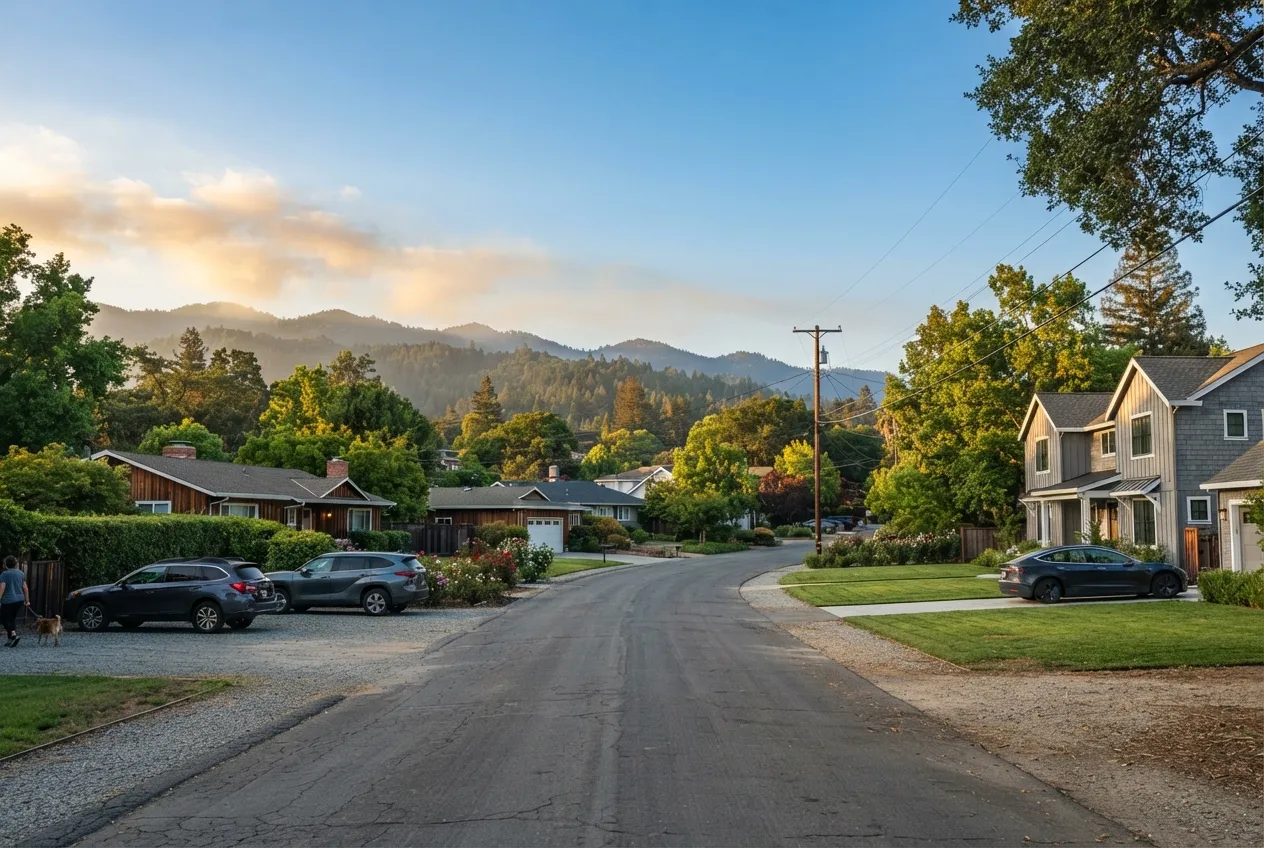
Lexington Hills is an unincorporated Santa Clara County community in the mountains roughly 15 miles southeast of our Los Altos base. Up at this elevation, homeowners live with cooler nights, wetter winters and steep lots that make equipment placement tricky. ExpertFlow HVAC Repair Service handles heating repair, furnace and heat pump installation, air conditioning for the warm months, ductless mini-splits, seasonal maintenance, duct cleaning and indoor air quality improvements for Lexington Hills properties. Here is how we think about mountain homes and what you can do to keep yours comfortable through the year.
Elevation changes the heating math
Down in the Santa Clara Valley, winters are mild and damp and summers are dry, with the southern and inland parts of the valley running hot. Climb into the mountains and the winter half of that picture gets more serious. Nights drop lower, rain arrives in heavier bursts and heating systems often run from October well into spring.
That long season puts real hours on a furnace or heat pump. A system that would be oversized for a valley bungalow may be just right for a drafty mountain home with high ceilings, single-pane windows or a room built over an open crawlspace. When we size new equipment here, we start with a load calculation for your actual house rather than a rule of thumb, and we look closely at where heat escapes.
A year of HVAC care in the hills
Mountain properties reward a steady routine. This is the rhythm we suggest to Lexington Hills owners, and it lines up with when we see the most problems.
- Early fall: heating tune-up, filter change and a check of venting and flue caps
- First storms: watch for water near the furnace, condensate lines and outdoor unit pads
- Midwinter: keep snow-melt runoff, mud and leaves away from the heat pump base
- Spring: clean the outdoor coil and look for rodent damage in ducts and wiring
- Early summer: cooling check before the first inland heat wave
- Late summer: indoor air quality review if dust or regional smoke has been heavy
Placing equipment on a sloped lot
Hillside homes rarely offer a flat, open spot for an outdoor unit. We level and secure condensers and heat pumps on proper pads or brackets, keep them out of drainage paths and set them where falling branches and needles are less of a threat. Clearance on all sides matters for airflow, and service access matters for the next technician who needs to reach it.
Inside, ducts in mountain homes often snake through tight crawlspaces or unconditioned attics. Every leaky joint in those runs sends warm air into the cold. Sealing and insulating ducts can make a noticeable difference in comfort, and it is something we check during both installs and duct cleaning visits.
Gas, propane or a heat pump?
Lexington Hills homes use a mix of fuels, and the right path forward depends on what you have now. Working gas or propane furnaces can stay in service; the Bay Area Air District appliance rules apply only when a furnace or water heater fails or is replaced. For future replacements, Rule 9-4 requires natural gas furnaces manufactured from 2029 to meet a zero-NOx emission standard, which practically steers buyers toward heat pumps.
Modern heat pumps handle the cool, damp mountain climate well when they are sized correctly and their defrost controls are working. Ductless mini-splits are another option for additions, studios and rooms that never warmed up properly. If you are weighing a switch, check BayREN and your local clean energy provider for current incentives; we confirm any offer before quoting it, since programs change by funding cycle. The federal 25C credit only covered heat pumps placed in service before December 31, 2025, so it is not part of today's planning.
Cooling and clean air for summer
Although the hills cool off at night, summer afternoons can still get hot, particularly on south- and west-facing slopes. We repair and install central air conditioners, and for homes without ducts we recommend mini-splits that cool individual rooms. Duct cleaning and better filtration help homes surrounded by forest keep dust, pollen and smoke out of the living space during dry months, and we make sure any filter upgrade suits the blower it is paired with.