
The short answer
A ductless mini-split is a good fit when a room or wing never gets comfortable, when a home has no ducts, or when old ductwork is not worth rebuilding. We size each indoor head to the room, plan a tidy line route outside, and walk you through options before any work starts.
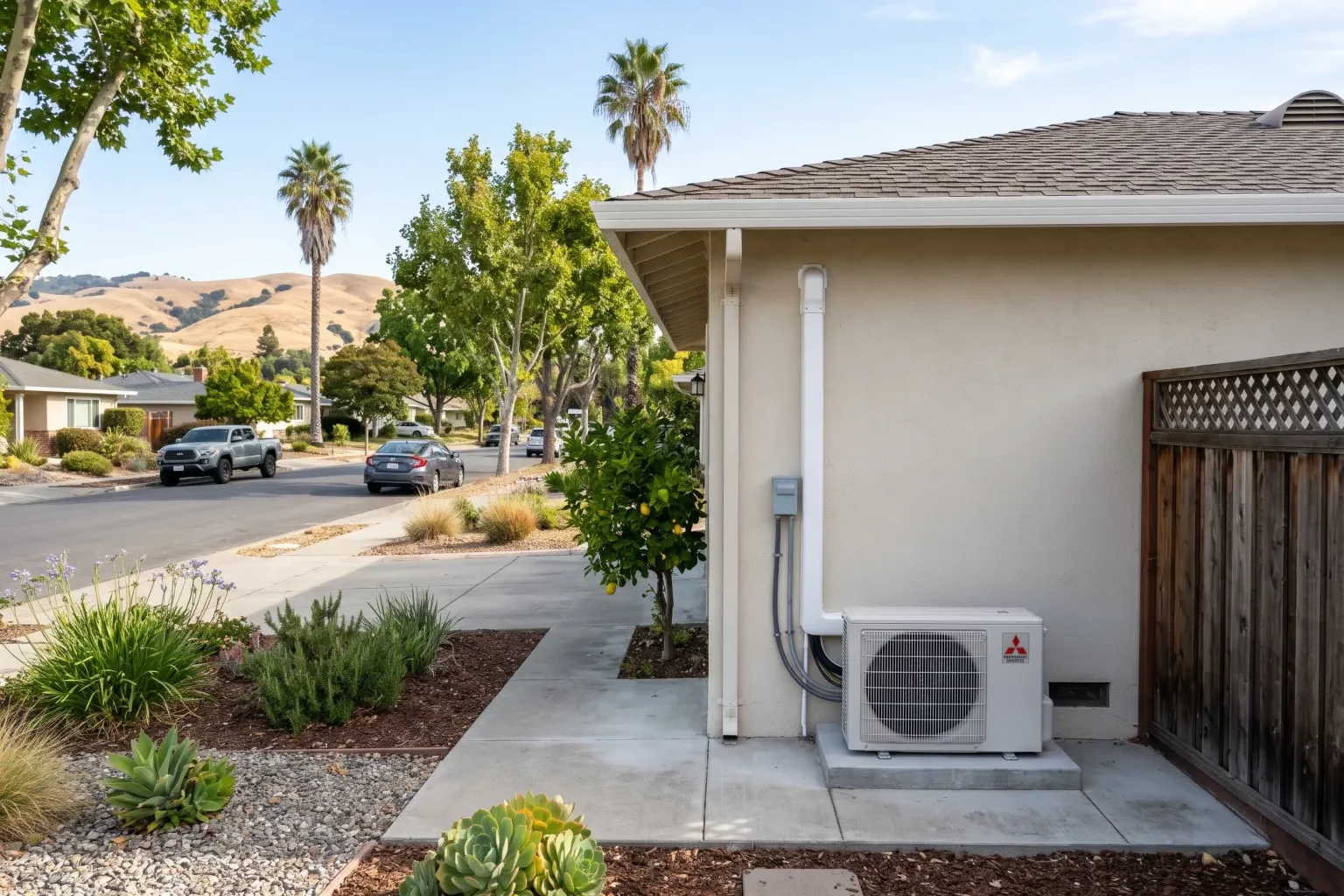
A ductless mini-split puts heating and cooling exactly where a Los Altos household needs it, without tearing open ceilings to run new ductwork. Each system pairs one outdoor compressor with one or more slim indoor heads, connected by a small bundle of refrigerant lines, a drain tube and a control wire that pass through a hole roughly the size of a soda can. ExpertFlow HVAC Repair Service plans and installs these systems for homes in Los Altos, Los Altos Hills, Mountain View, Palo Alto, Cupertino and Sunnyvale. Many of the houses here were built long before central air was common, and plenty of them added a garage conversion, a sunroom or a second story later on. Those spaces rarely share the comfort of the original rooms. A mini-split is often the cleanest way to fix that, and because it is a heat pump, it also gives you electric heating for the cooler, damp months of the Santa Clara Valley winter.
Rooms and homes that tend to need one
Most calls about ductless systems start with a single complaint: one part of the house is always wrong. The bonus room over the garage bakes on August afternoons. The converted garage office needs a space heater from November to March. An addition was built without any connection to the existing furnace. In each case the main system is not the problem; the space simply sits outside its reach.
Other homes have no ducts at all. Older ranch houses heated by a wall furnace or a floor furnace, or by electric baseboard strips, can move to a multi-zone ductless setup and finally get cooling along with steady heat. For some owners the trigger is a remodel, when walls are open and it makes sense to plan a better system at the same time.
- A room that runs several degrees warmer or cooler than the rest of the house
- Space heaters or window units that have become a permanent part of the season
- An accessory dwelling unit, studio or in-law suite that needs its own controls
- A home with no ductwork, or ducts in such poor shape that rebuilding them is impractical
- A wish to add cooling without giving up closet or attic space to a large air handler
What our technician evaluates before recommending equipment
A mini-split that is too large cycles on and off, leaves the room clammy and wears out sooner. One that is too small runs flat out on the hottest days and never quite catches up. Getting it right means looking at the actual room, not just its square footage.
During the assessment we note window size and direction, because a west-facing wall of glass changes the load considerably. We check ceiling height, insulation where it can be seen, and how the room connects to the rest of the house. We also look at where the outdoor unit could sit with good airflow and reasonable distance from bedrooms and neighbors, how the refrigerant lines would travel, and whether the electrical panel has room for a new circuit.
Head placement gets real attention. A wall-mounted unit is the most common choice, but ceiling cassettes, low floor consoles and concealed ducted heads each have a place. We talk through how the room is used so the air does not blow straight across a bed or a desk.
Repairing an existing mini-split versus installing new
Not every ductless call ends in a new system. If you already own a mini-split that has stopped heating or cooling, the first job is to find out why. Clogged filters and coils, a blocked condensate line, a failed sensor or a small refrigerant leak at a flare fitting are all repairable, and fixing them is often the sensible choice for equipment that is otherwise sound.
Replacement starts to make more sense when the compressor has failed on an older unit, when replacement parts are hard to source, or when the system was undersized from the start and never kept up. Some owners also choose to replace when they want to add zones, since matching new heads to an aging outdoor unit is not always possible. We explain what we found, what each path involves and what we would do in your position, then let you decide.
What shapes the cost of a ductless project
We do not publish prices, because two mini-split jobs on the same street can look very different. What we can do is explain the factors so the written estimate makes sense when you read it.
- The number of indoor heads and whether they share one multi-zone outdoor unit or use separate single-zone units
- The style of each head: wall-mounted, ceiling cassette, floor console or concealed ducted
- Line set length and route, including any runs through attics, crawlspaces or finished walls
- Electrical work, such as a new dedicated circuit or a panel that needs upgrading
- Pad, wall bracket or roof stand for the outdoor unit, plus line covers for a finished look
- Efficiency level and cold-weather performance of the equipment you choose
- Permits and inspections required by the city where the home is located
Rebates and heating rules worth knowing
Because a mini-split is a heat pump, it fits the direction Bay Area air rules are heading. Under Bay Area Air District Rule 9-4, natural gas furnaces manufactured from 2029 must meet a zero-NOx emission standard, which in practice points homeowners toward heat pumps when a furnace is replaced after that date. Those rules do not force anyone to remove working equipment; they apply only when an existing furnace fails or is replaced.
On incentives, the federal 25C tax credit only covered qualifying heat pumps placed in service before December 31, 2025, so it does not apply to new installations now. BayREN and your local clean energy provider may offer heat pump incentives, but amounts change with each funding cycle. We confirm what is currently available before including it in any quote.
How an installation visit unfolds
It begins with an in-home assessment, where we measure, look at the electrical panel and talk about how you use each space. You receive a written proposal that lists the equipment, head locations and scope of work. Once you approve it, we handle the permit and schedule the install.
On installation day the crew protects floors, mounts the indoor heads, sets the outdoor unit, drills and seals the wall penetrations and runs the line sets. We pressure test the refrigerant circuit, pull a deep vacuum to remove moisture and confirm the charge before starting the system. Before leaving, we show you how to use the remote or app, how to clean the washable filters and how to set schedules for each zone. A final city inspection closes out the permit.