
The short answer
Duct cleaning helps when ducts hold visible debris, construction dust, pest contamination or mold-like growth. We inspect first, sometimes with a camera, and tell you whether cleaning, sealing, repair or replacement will solve the actual problem.
Ducts are the part of a heating and cooling system most people never see, and they quietly shape how much dust settles on the bookshelves, how evenly rooms heat up and how hard the furnace or heat pump has to work. ExpertFlow cleans and inspects ductwork for homes in Los Altos, Los Altos Hills, Palo Alto, Mountain View, Cupertino and nearby towns. We start by finding out whether cleaning is actually what your ducts need, because sometimes the real fix is sealing, repairing or replacing a section.
Clues That Your Ductwork Needs Attention
Dirty ducts are not always obvious, and some symptoms people blame on dust actually come from leaks or disconnected runs. These are the signs that justify a closer look.
- Dust puffs out of registers when the blower starts
- Furniture and floors gather a gray film within days of cleaning
- A musty or stale odor fills the room each time the system runs
- You recently finished a remodel, sanded floors or removed old plaster
- Droppings, nesting material or insect debris appear near vents
- Filters clog much faster than the schedule suggests
- One room is always stuffy while others feel fine
Our Inspection Comes Before Any Brushes
We remove a few register covers and look into the supply and return runs, using a camera on longer sections where needed. The return side often tells the most, since it pulls air from the living space and collects the heaviest buildup. We also check the blower compartment and, where accessible, the indoor coil, because a dirty blower wheel or coil will spread dust no matter how clean the ducts are.
In attics and crawlspaces, the technician examines the physical condition of the ducts: whether flex duct has sagged or been crushed, whether joints have pulled apart, whether insulation jackets are torn, and whether animals have chewed through anything. Many older Los Altos and Palo Alto homes have duct systems that have been modified through several remodels, and it is common to find a run that was cut and never reconnected, blowing conditioned air into the attic.
If moisture is present, we look for its source, such as a leaking condensate line, a damp crawlspace or condensation on uninsulated metal ducts. Cleaning a wet duct without fixing the moisture just sets up the same problem again.
Why Local Homes Collect Duct Problems
Long dry summers in the Santa Clara Valley bring fine dust and pollen that work their way into return grilles, while mild, damp winters can leave crawlspace ducts sitting in humid air for months. That mix is hard on ducts that are poorly sealed or wrapped in aging insulation.
Many houses around Los Altos, Mountain View and Sunnyvale also run their ducts under the floor or through low attics, where pests find easy shelter. Older homes that once relied on floor furnaces may have had ducts added later in whatever space was available, which can mean tight bends, long runs and returns that are too small. Each of those issues shows up as dust, noise or uneven rooms, and each points to a different fix. Knowing the history of your house, including any remodels, additions or equipment swaps, helps us understand what we are likely to find before we open the first register.
Clean, Seal, Repair or Replace
Once we know the condition of the system, the recommendation usually falls into one of four categories, and sometimes a mix of them.
Cleaning fits rigid metal ducts and sound flex duct that hold dust, debris or remodel residue. We use negative pressure to pull loosened material out of the system while agitation tools break it free from the walls, and we clean registers, grilles and the blower area as part of the job.
Sealing is the answer when the ducts are clean enough but leaky. Gaps at joints and boots let unconditioned attic or crawlspace air into the system and push conditioned air out, which wastes energy and draws in dust.
Repair covers individual damaged runs: a crushed section, a torn insulation jacket or a disconnected boot. Replacement makes sense when old flex duct has deteriorated throughout, when ducts were undersized for the current equipment, or when you are installing a heat pump and the existing layout cannot deliver the airflow it needs. Many heat pumps need more airflow than the furnaces they replace, so we check that during any equipment upgrade.
What Determines the Price of Duct Work
We quote after inspection, because two houses of similar size can differ widely. The main factors are the number of supply and return runs, the total length of duct, the type of material, and how accessible the attic or crawlspace is. Low crawlspaces and attics with little headroom slow the work considerably.
Contamination level matters as well. Light dust is quick to address; construction debris, pest droppings or moisture damage takes more time and may require replacing sections instead of cleaning them. Adding sealing, coil cleaning or blower cleaning to the visit also changes the scope.
What to Expect During the Service
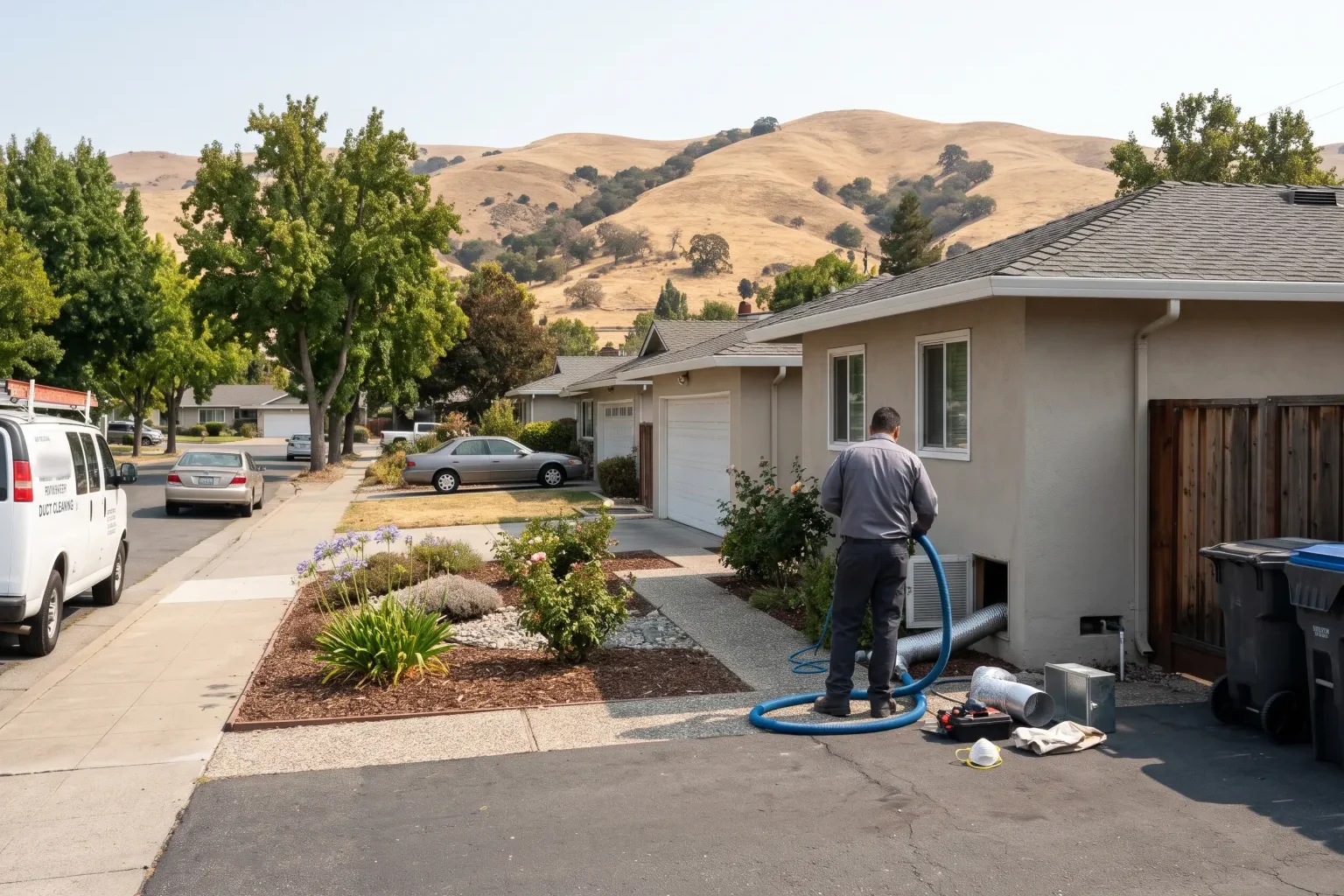
We arrive, lay down floor protection along the path to the equipment and the registers, and review what we found during inspection. The system is turned off, registers are covered or removed, and our equipment is connected to create negative pressure in the ducts.
Each run is agitated and vacuumed, working toward the collection point, followed by the returns, blower compartment and grilles. A new filter goes in at the end. Before we leave, the technician runs the system, checks airflow at the registers and shows you before-and-after photos of key sections, along with any repair items we noted for later.