The short answer
Many Portola Valley AC failures come from debris in the outdoor coil, rodent damage to wiring, blocked drains or leaks along long refrigerant lines. We trace the actual fault with testing and repair it, often in one visit when the parts are common.
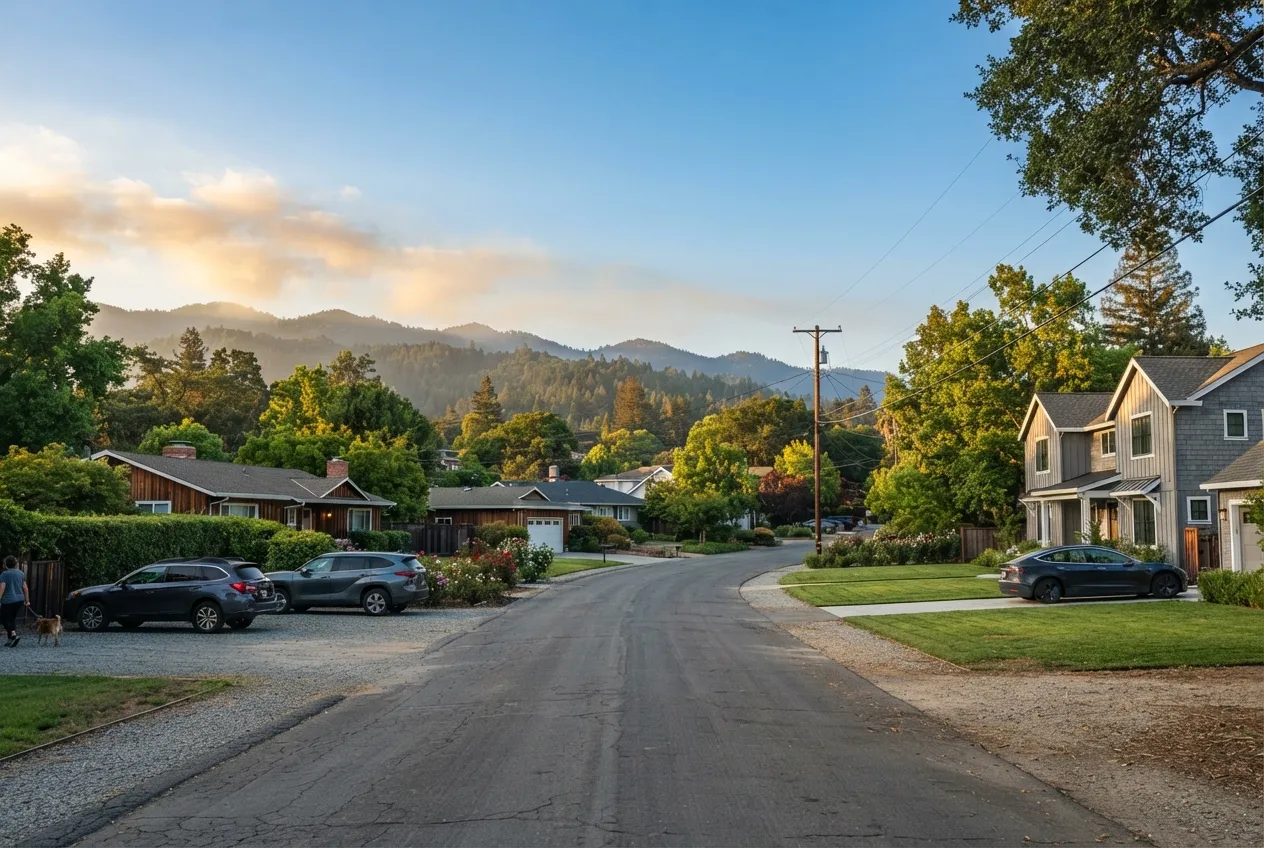
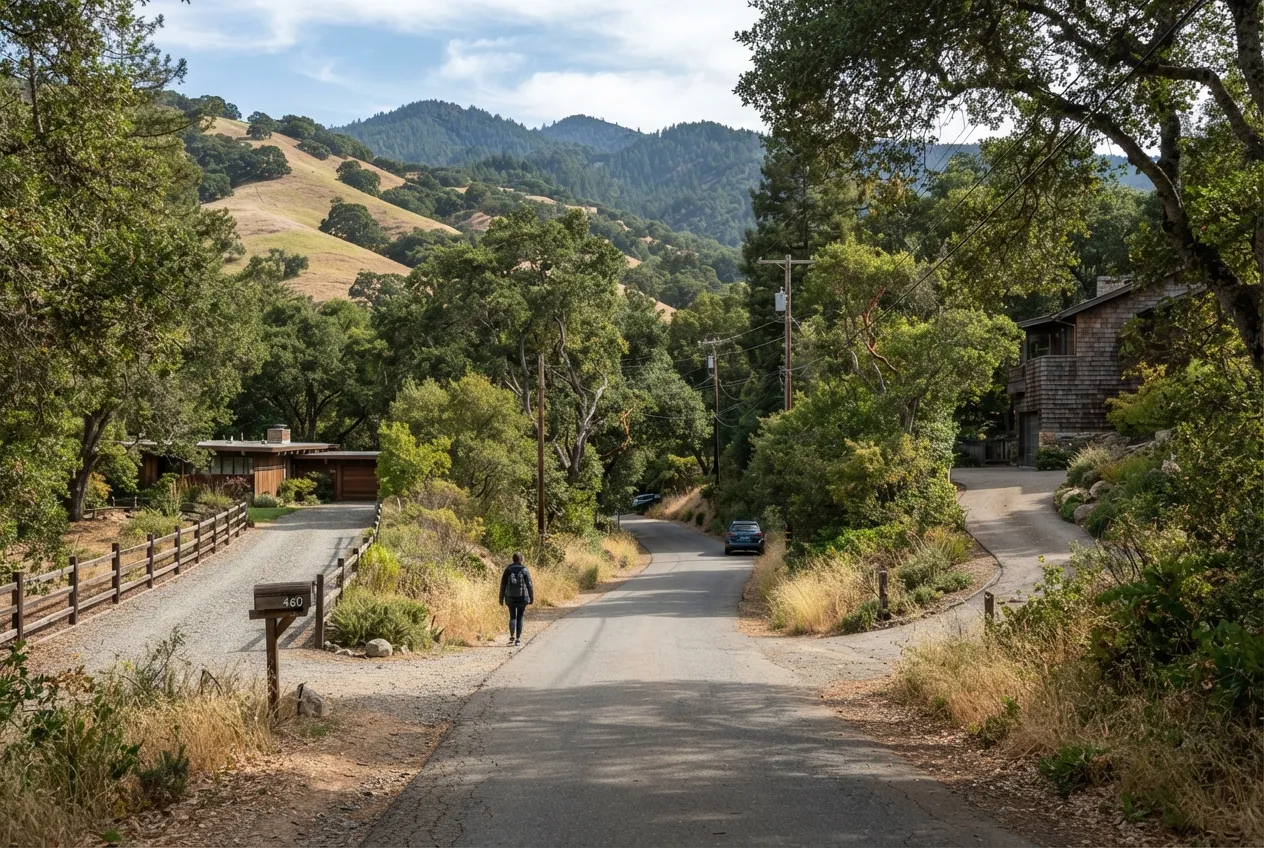
Air conditioners in the foothills live closer to nature than their counterparts in the flats. Leaves and seed pods pile into condenser coils, small animals look for shelter inside warm cabinets, and long refrigerant runs across larger properties give leaks more places to start. ExpertFlow HVAC Repair Service drives about eight miles west from Los Altos to repair central air, heat pumps and ductless systems throughout Portola Valley, ZIP 94028, in San Mateo County. This page covers the failures we see most on wooded and hillside properties, what you can check before calling, and how a repair visit unfolds.
Problems that come with a wooded setting
Outdoor units tucked among trees collect oak leaves, twigs and pollen on the coil fins and inside the cabinet. A matted coil cannot release heat, so pressures rise, the compressor works harder and the system may shut itself off on a high-pressure safety. Debris in the base pan also traps moisture against metal and controls.
Rodents and other small animals sometimes nest in or near equipment during the cooler months, chewing low-voltage thermostat wiring or insulation on refrigerant lines. The result can be a system that will not start at all, or one that runs intermittently with no obvious pattern.
- Matted leaves or pollen on the outdoor coil
- Chewed thermostat or control wiring near the unit or in the crawlspace
- Damaged line insulation that lets the suction line sweat or lose capacity
- Nests or debris inside the condenser fan housing
Checks to make before we arrive
Confirm the thermostat is set to cool and calling for it, check the breaker for the outdoor unit and the switch at the indoor equipment, and replace the air filter if it looks dark. Look at the outdoor unit from a safe distance for obvious debris or damage. If you see ice on the indoor coil or lines, set the system to fan only to let it thaw.
Please do not remove panels or reach into the fan. If you suspect an animal is inside the equipment, leave the system off and tell us when you call.
Long line sets and leak hunting
On larger Portola Valley properties, the distance between the outdoor unit and the indoor coil can be considerable, sometimes with lines buried, routed under decks or passed through several framing members. More joints and more length mean more potential leak points. A system that slowly loses cooling over a season, or needs refrigerant added repeatedly, almost certainly has a leak.
We check pressures and temperatures to confirm the charge, then inspect brazed joints, service valves, the indoor coil and accessible line sections using electronic detection. Repairing the leak comes before recharging, because adding refrigerant to a leaking system only delays the next breakdown.
What happens during the visit
Our technician listens to what you observed, then runs the system and measures. Capacitor and contactor tests, motor and compressor amperage, refrigerant pressures and the temperature drop across the coil tell us where the fault is. Drain lines are checked for clogs and condensate pumps for proper operation, since an overflow can damage finished spaces below an attic air handler.
We explain the cause and options before doing any work. Common electrical parts, fan motors, coil cleaning and drain clearing are often completed on the same trip. Bigger repairs are quoted first. Because the drive is longer than to the flats, we try to stock the parts most likely to be needed based on your description.
Preventing the next call
In a wooded area, a simple routine goes a long way: trim plants back from the outdoor unit, clear leaves from around and on it after windy weather, and have the coil cleaned and wiring inspected in spring before cooling season. If the equipment is older and failing often, we can discuss replacement, including heat pumps that also heat; Air District rules do not require removing a working furnace. We also repair cooling systems in Los Altos Hills, Palo Alto, Atherton, Mountain View and East Palo Alto.
More services in Portola Valley
- Heating Repair in Portola Valley
- Heat Pump Installation in Portola Valley
- AC Installation in Portola Valley
- Furnace Repair in Portola Valley