
The short answer
A new AC in Santa Clara starts with a load calculation and a duct inspection, not a model number. We size the system to your house, check that the ducts and electrical service can support it, and set the outdoor unit where it can breathe and stay quiet for neighbors.
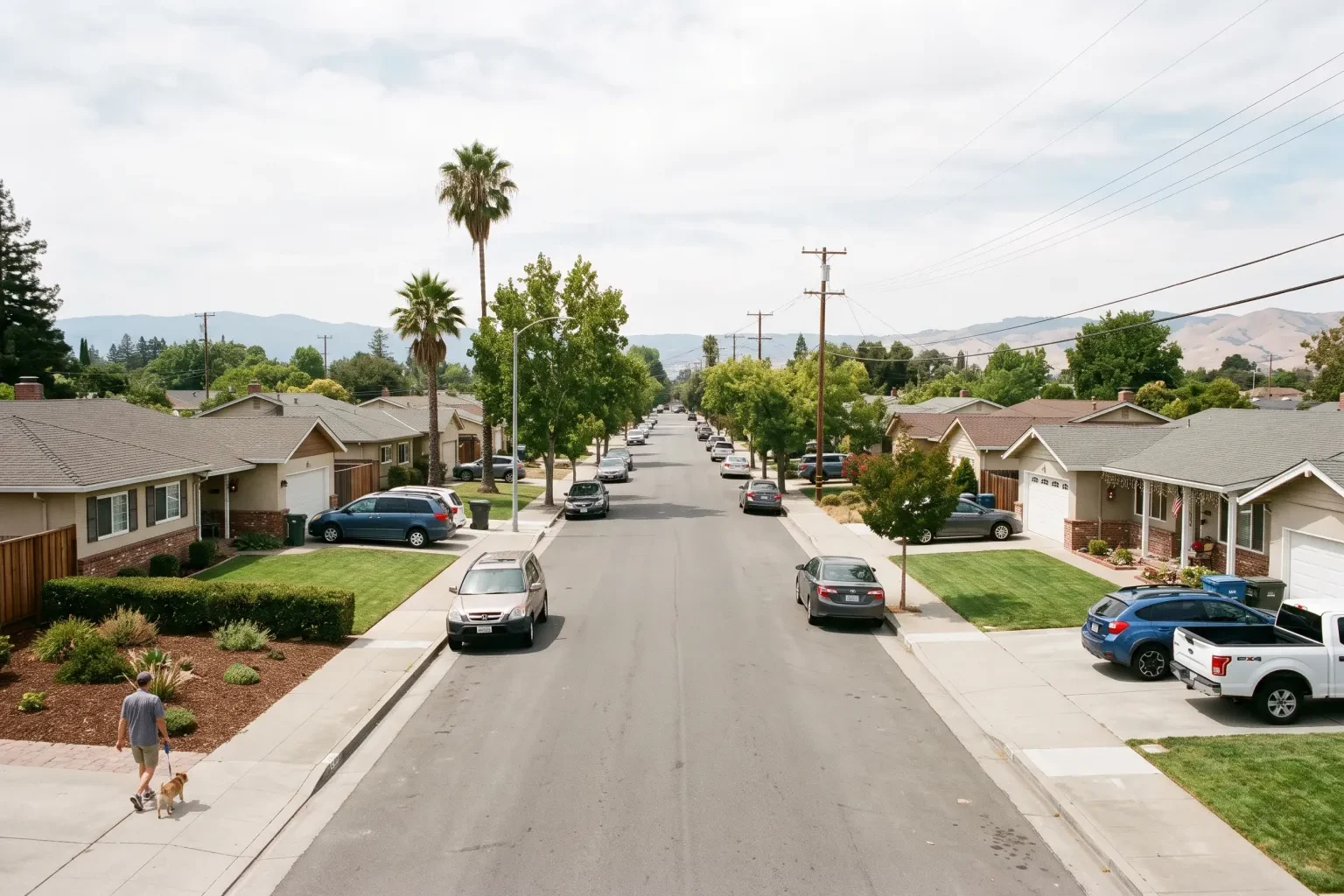
Santa Clara sits on the flat valley floor about 7 miles east of our Los Altos shop, and a lot of the houses there were built before central air was standard. Some owners are adding cooling for the first time, others are retiring a condenser that has limped through too many dry summers. ExpertFlow HVAC Repair Service plans and installs air conditioning across ZIP codes 95050, 95051, 95053 and 95054, and this page explains how we approach that job for the houses we actually see in this city: single-story ranch layouts, modest attics, side yards with tight clearances, and ductwork that may be decades old.
Start With the House, Not the Equipment
The most common installation mistake we correct is oversizing. A unit that is too large for the home cools the air quickly, shuts off, and leaves the rooms clammy and uneven. In a Santa Clara summer, where afternoons are dry and warm and nights usually cool off, a correctly sized system runs longer, steadier cycles and keeps bedrooms on the sunny side of the house from lagging behind the rest.
So the first visit is a measurement visit. We look at square footage, ceiling heights, window area and orientation, attic insulation, and how much shade the lot gets. That information drives the capacity we recommend. If you have an older system, its size is a data point, but we do not assume it was right the first time.
Ducts Decide How Well a New System Performs
Many homes in this part of the valley still run on the original sheet-metal or early flexible ducts, often installed for a furnace that only needed to push warm air a few months a year. Cooling asks more of that network. Air conditioning moves more air, and leaks or crushed runs in a hot attic waste a large share of what the new equipment produces.
Before we quote an installation, we inspect the attic or crawlspace runs, check the return air path, and measure static pressure where we can. Sometimes the ducts are fine with sealing. Sometimes one or two undersized runs need replacing so a back bedroom finally gets enough air. We tell you which situation you are in and why.
- Disconnected or sagging runs in the attic
- Returns too small for the airflow cooling requires
- Uninsulated ducts losing cold air before it reaches the room
- Supply registers placed for heating rather than cooling
Central AC or a Heat Pump?
Plenty of Santa Clara homeowners who call about air conditioning end up asking whether a heat pump makes more sense, because it cools in summer and heats in winter with one outdoor unit. With the valley's mild, damp winters, a heat pump handles heating comfortably in most homes here. It is also worth knowing that Bay Area Air District rules will require gas furnaces made from 2029 onward to meet a zero-NOx standard, which nudges future furnace replacements toward electric equipment. Those rules do not force you to remove a working furnace.
If your furnace still has life in it, a straight AC addition paired with the existing furnace blower is a reasonable choice. If the furnace is near the end, combining the two jobs into a single heat pump installation can save a second round of work later. We lay out both options side by side.
Where the Outdoor Unit Goes
Side yards in Santa Clara are often narrow, and the condenser has to fit with enough clearance to pull in air and push heat out. We avoid spots boxed in by fences or tucked under low eaves, and we pay attention to which windows, yours and your neighbor's, are closest to the fan. A level pad, a proper disconnect, and line sets routed neatly along the wall are part of the standard job, not extras.
What Installation Day Looks Like
Most replacements on a single-story home take a day; a first-time installation with duct changes may take longer. We protect floors along the work path, remove old equipment, set the new indoor coil and outdoor unit, pressure test and evacuate the refrigerant lines, and charge the system to the manufacturer's specifications. Then we run it, check temperatures at the registers, and walk you through the thermostat. Any city permit work required for the installation is handled as part of the job, and we explain what the inspection involves before we start.
More services in Santa Clara
- AC Repair in Santa Clara
- Heating Repair in Santa Clara
- Heat Pump Installation in Santa Clara
- Furnace Repair in Santa Clara